
what the buying process looks like, start to finish
here is the honest version. the buying process is not one big moment where you sign and the house is yours. it is a sequence of smaller steps, and they happen in a fairly set order whether you are ready for them or not.
roughly, it goes like this: you work out what you actually need in a home, you search and build a shortlist, you inspect properly, then you either make an offer (private treaty) or bid (auction). if your offer or bid is accepted you sign a contract of sale, you work through your conditions like finance and building inspections, you pass any cooling off period, and then the contract goes unconditional. after that comes settlement, where the money moves and the keys are yours.
the thing i wish someone had said to me earlier: the money work comes before the house work. you want a clear picture of what you can save and what you might borrow, ideally with finance pre-approval, before you start making serious offers. i spent ages scrolling listings before i had any of that sorted, and it felt productive, but it wasn't. on this page i walk through every step of the actual buying part, from defining what you need all the way to going unconditional. you don't have to read it in one go. start where you are.
rough sequence only, the order and exact steps can vary by state and by sale type
worth knowing
the money work comes before the house work. get a clear picture of what you can save and borrow, ideally with finance pre-approval, before you start making serious offers.defining what you actually need in a home
before you look at a single listing, it helps to be clear on what you are actually looking for, because if you don't decide it, the market decides it for you. i think of it as three lists: wants, needs and won'ts.
needs are the things the home genuinely has to have for your life to work: enough bedrooms, a location you can commute or get the kids to school from, something within your budget. wants are the nice-to-haves you would trade away if you had to: the second bathroom, the bigger yard, the renovated kitchen. won'ts are your hard noes, the things that would make you walk away no matter how pretty the photos are, like a busy main road or a flood-prone block.
be honest about which list each thing belongs on, because emotion blurs it fast. the first home you fall in love with will quietly promote half your wants into needs in your head. writing it down before you start looking gives you something to check yourself against when you are standing in a gorgeous kitchen ignoring the fact that it is an hour from work. it also makes your search faster, because you can filter hard and stop wasting weekends on places that were never going to work.
how to search and shortlist properties
once you know your wants, needs and won'ts, searching gets a lot less overwhelming. set your filters to your needs and your budget, not your dreams, and let the won'ts knock things out fast.
the main portals (realestate.com.au and Domain) are where most listings live, so set up saved searches with alerts so new listings come to you instead of you refreshing all day. it is also worth getting a feel for the area beyond the photos: drive the street at different times, check how far things actually are, and look at what comparable homes nearby have recently sold for so you have a rough sense of value before you fall for anything.
then build a shortlist. i'd keep it tight, a handful of places you would genuinely act on, rather than a giant list you can't keep straight. the goal of searching isn't to look at everything, it's to find the few worth inspecting properly. one more thing worth knowing: not every property is advertised, some sell off-market through agents before they ever hit the portals, so it can pay to tell a few local agents what you are after.
open homes: what to look for and what to ask
photos are marketing. the open home is where you find out what is really going on, so go in looking past the styling. furniture and good lighting are there to make the space feel bigger and warmer than it is.
look at the bones: signs of damp or water stains, cracks in walls, the state of the roof and gutters if you can see them, water pressure if you can run a tap, how much natural light the place actually gets, and noise from the road or neighbours. open cupboards, check storage, look at the age of the kitchen and bathroom because those are expensive to replace. it is easy to get swept up in the nice parts, so make yourself check the boring, expensive stuff too.
and ask questions. how long has it been on the market? why are the owners selling? is the sale by private treaty or auction? what are the council rates and any strata fees? is there a building and pest report available, or should you arrange your own? has there been much interest? agents work for the seller, so take their answers with that in mind, but the questions still tell you a lot. take notes and photos at each one, because after three or four opens they all blur together. a building and pest inspection by a professional before you commit is one of the smartest things you can do, and it is far cheaper than the surprise it can save you from.
one to watch
a building and pest inspection by a professional before you commit is one of the smartest things you can do, and it is far cheaper than the surprise it can save you from.how to make an offer on a house
in a private treaty sale, once you have found the one, you make an offer. an offer is you telling the agent the price and terms you are willing to buy at, and it usually goes to the agent who passes it to the seller. you can make it verbally, but putting it in writing (often on an offer form or by email) is stronger and clearer, and the agent will usually want it in writing anyway.
your offer is more than just a number. it includes the price, but also your proposed conditions: things like being subject to finance, subject to a satisfactory building and pest inspection, the deposit amount, and your preferred settlement date. a clean offer with fewer conditions can be more attractive to a seller, but conditions like subject to finance are there to protect you, so don't strip them out just to look good unless you genuinely understand the risk.
few things to keep in mind. work out your real ceiling beforehand, the number you will not go past, and write it down so the moment doesn't push you over it. don't necessarily lead with your top number, but also don't lowball so hard you insult the seller and lose the chance to negotiate at all. and remember an offer can be accepted, rejected, or countered, so going in is the start of a conversation, not the end. once an offer is accepted in a private treaty sale, it generally becomes binding when contracts are signed and exchanged, which is also usually when any cooling off period starts. rules differ by state, so this is one to check for where you are buying and to run past your conveyancer.
the bit i'd flag
work out your real ceiling beforehand, the number you will not go past, and write it down so the moment doesn't push you over it.how to negotiate with real estate agents
negotiating sounds intimidating, but at its core it is just two sides trying to agree on a price, with the agent in the middle working for the seller. that last part matters: the agent is friendly and helpful, but they are paid by and acting for the seller, so anything you tell them about your budget or how much you love the place can be used to push the price up.
so the first rule is to keep your cards close. know your ceiling, but don't announce it. if the agent asks what your budget is, you don't have to answer with your maximum. lead with research, not emotion: if comparable homes nearby have sold for less, that is a fair, factual reason for your number, and it is much harder to argue with than a feeling.
use your conditions as part of the negotiation, not just the price. a slightly lower offer with a flexible settlement date, or a clean offer that suits the seller's timeline, can sometimes win over a higher one that is messier. be prepared to walk away, and mean it, because the buyer who can genuinely leave has the most power in the room. and stay polite and unhurried; agents create urgency for a living ("there's another offer coming in"), and sometimes there is and sometimes there isn't. you are allowed to take a breath and check things before you respond.
buying at auction: how the process works
an auction is a public sale where buyers bid against each other and the property sells to the highest bidder, as long as the price has passed the seller's reserve (the minimum the seller will accept, which is usually kept secret). this is a completely different game to private treaty, and the biggest difference is the one that catches people out: at auction there is generally no cooling off period, and your bid is not subject to finance.
that means if you win, you are bound on the fall of the hammer. you sign the contract and pay the deposit then and there, and you cannot back out because your finance fell through or the building inspection turned up something nasty. so all of your homework has to be done before auction day: your finance should be sorted (ideally pre-approval that covers that property), your building and pest inspection done, and your conveyancer or solicitor should have reviewed the contract.
on the day, register to bid (you usually have to register beforehand with id), set your absolute limit in advance and write it down, and stick to it, because auctions are designed to get you bidding past your plan in the heat of it. if the property doesn't reach the reserve it gets "passed in", and the highest bidder often gets the first chance to negotiate with the seller afterwards. auction rules and the cooling off position vary by state, so check the rules where you are buying and have your conveyancer guide you, because this is genuinely the highest-stakes way to buy.
the honest part
at auction there is generally no cooling off and your bid is not subject to finance, so if you win you are bound on the fall of the hammer. all your finance and checks have to be done before the day.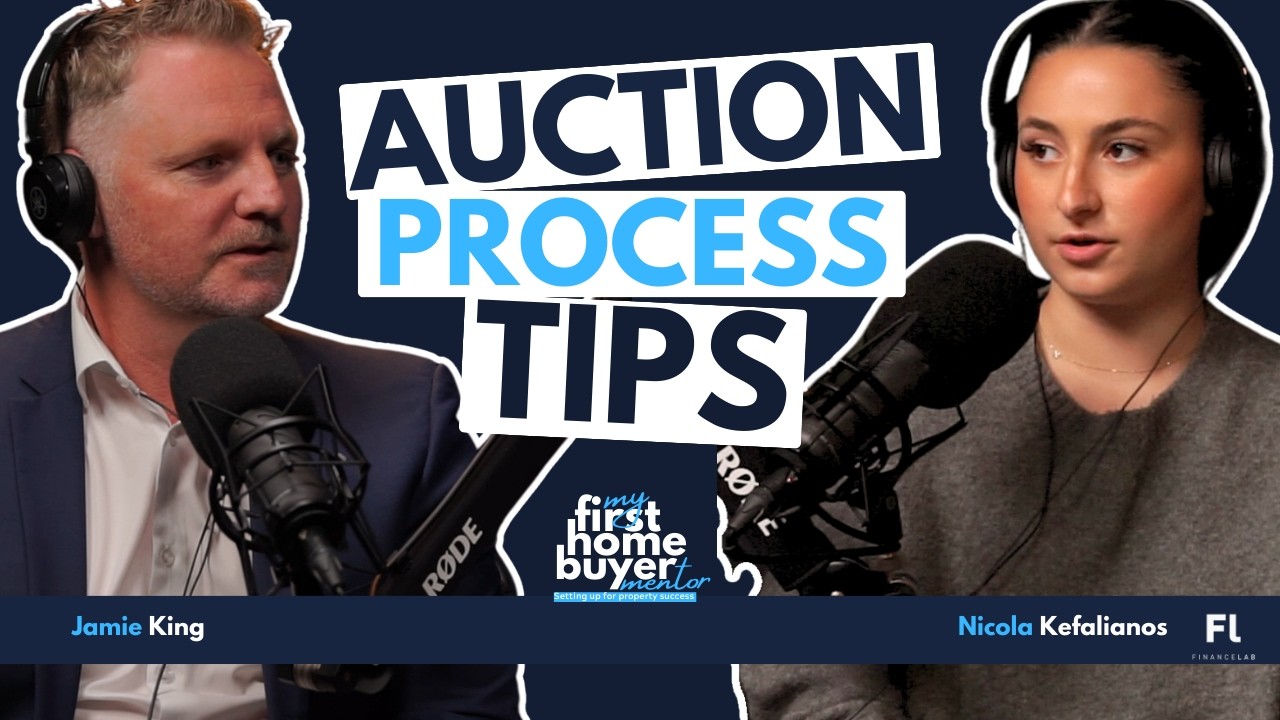
watch: how an auction really runs, and why your homework has to be done first
private treaty vs auction
most homes are sold one of two ways, and which one you are dealing with changes how you should play it.
private treaty is the common one: the home is listed at a price (or a price guide), and you negotiate with the seller through the agent, usually making an offer that can include conditions like subject to finance and subject to a building inspection. it is generally lower pressure, you can take a bit more time, and in most states there is a cooling off period after you sign. it suits buyers who want some safety nets and room to think.
auction is faster and more public. there is a set date, buyers bid against each other, and the property sells on the day if it hits the reserve. the trade-off is that it is high pressure and high risk for a buyer: generally no cooling off, and your winning bid is unconditional, so all your checks and finance must be done first. it can favour confident, fully-prepared buyers, and it can suit sellers in hot markets where competition pushes the price up.
the practical takeaway: if it is private treaty, your conditions protect you, so use them. if it is auction, the safety nets are gone, so you have to build them in yourself by doing everything before the day. cooling off and auction rules differ between states, so always check the position where you are buying.
| what to weigh | private treaty | auction |
|---|---|---|
| how it sells | listed price or guide, you negotiate via the agent | set date, buyers bid, sells on the day if it hits the reserve |
| pace and pressure | generally lower pressure, more time to think | fast and public, high pressure |
| conditions | you can usually offer subject to finance and inspections | winning bid is generally unconditional |
| cooling off | in most states there is a cooling off period after signing | generally none, bound on the fall of the hammer |
| who it suits | buyers who want safety nets and room to think | confident, fully prepared buyers |
the contract of sale and what is in it
the contract of sale is the legal document that sets out the deal: who is buying, who is selling, the property, the price and the terms. when you sign and exchange it, you are legally committing to the purchase, which is exactly why you want someone qualified reading it before you sign, not after.
inside it you will typically find the agreed price and the deposit amount, the settlement date (when the balance is paid and the property changes hands), the names of the parties and a description of the property, and any conditions attached to the sale (like subject to finance). it also usually includes or attaches important documents about the property, which in some states form part of a vendor's statement or disclosure, covering things like the title, what's included in the sale (fixtures and fittings), zoning, and any easements or encumbrances on the land. the exact contents and what the seller must disclose vary by state.
this is the single best place to spend money on a professional. a conveyancer or solicitor reviews the contract, explains what the conditions actually mean, flags anything missing or unusual, and makes sure your interests are protected before you are locked in. do not sign a contract of sale you don't fully understand. once it is signed and exchanged, your options narrow quickly, so the review happens first.
subject to finance and other key conditions
conditions are the protections you build into your offer so you are not trapped if something goes wrong. in a private treaty sale you can usually include them; at auction you generally can't, which is why auction is riskier.
the big one is "subject to finance". it means your purchase only proceeds if your lender formally approves the loan for that specific property by a set date. if your finance falls through within that condition, you can generally withdraw and get your deposit back, instead of being stuck buying a house you can't fund. pre-approval is not the same as this; pre-approval is an early indication, while the subject to finance condition protects you right up to formal, full approval. the other common ones are "subject to a satisfactory building and pest inspection", which lets you walk away or renegotiate if the report finds serious problems, and sometimes "subject to sale" of your existing home.
each condition has a deadline (a date by which it has to be met or satisfied), and missing a deadline can have real consequences, so you have to stay on top of them. this is another reason a conveyancer earns their fee, because they track these dates and tell you what each condition requires. the specifics of how conditions work and what "satisfactory" means can vary by state and by contract, so go through yours with your conveyancer rather than assuming.
worth knowing
pre-approval is not the same as subject to finance. pre-approval is an early indication, while the subject to finance condition protects you right up to formal, full approval for that specific property.the cooling off period explained
a cooling off period is a short window after you sign a contract in a private treaty sale where you can change your mind and pull out of the purchase, usually for a small penalty. it exists to give buyers a bit of breathing room so a big decision isn't completely locked the second the pen hits the paper.
here is the important part: the length of the cooling off period, the penalty for using it, and whether you even get one at all are all set by state and territory law, and they genuinely differ around the country. some states give a few business days, some less, and the penalty (often a percentage of the price) varies too. and in most places, properties bought at auction have no cooling off period at all, which is the single most important auction warning to remember.
because it varies so much, this is one to check carefully for the exact state you are buying in, and to confirm with your conveyancer before you sign. don't assume the cooling off rules from one state apply in another, and never rely on cooling off as your safety net at an auction, because it usually isn't there. if you are unsure whether you are fully committed, ask your conveyancer to spell out your exact position in writing.
check current rules
the length of the cooling off period, the penalty for using it, and whether you get one at all are set by state and territory law and genuinely differ. confirm the position for your state with your conveyancer before you sign.going unconditional: what happens next
"going unconditional" is the moment your contract becomes fully binding because all the conditions have been met. your finance is formally approved, your building and pest inspection is satisfactory, the cooling off period (if any) has passed, and there is nothing left protecting your right to walk away. from here, you are committed to completing the purchase.
this is a genuinely big milestone, and it usually comes with a feeling of "oh, this is actually happening". once you are unconditional, the focus shifts to getting to settlement. your conveyancer or solicitor and your lender do most of the heavy lifting: preparing the transfer of land, sorting the final figures, and coordinating the date the money moves and the property changes hands. you will typically need to have the rest of your deposit and funds in place, arrange building insurance from the agreed point, and do a final inspection of the property shortly before settlement to check it is in the condition you agreed to buy it in.
then settlement happens, the balance is paid, the title transfers, and the keys are yours. that is the end of the buying process and the start of the part where it is actually your home. if you want the full map of how all of this fits together, including the money work that comes before any of it, that is what the rest of the guide is for, and the podcast episodes walk through the real conversations behind each step.
grab my deposit roadmap
the money work that comes before any of this, mapped out step by step so you reach the offer stage ready.
 hear it on the showwants, needs, and won'ts: defining your home criteria
 hear it on the showhow to find properties below $500k
 hear it on the showopen home checklist: inspection tips
 hear it on the showhow to make an offer
 hear it on the showhow to negotiate with real estate agents as a first-time home buyer
 hear it on the showwhat you need to know about the auction process
 hear it on the showwhat you need to know about cooling off periods when buying property
related guides
the first home buyer guide what it costs to buy a first home deposit, grants and schemes building and new homes settlement and legals home loans explained every question, answered free guides and checklists
common questions
how do you make an offer on a house?
in a private treaty sale you make an offer by telling the agent the price and terms you're willing to buy at, ideally in writing so it's clear. your offer isn't just a number; it includes your proposed price, any conditions (like subject to finance and subject to a building inspection), the deposit, and your preferred settlement date. the seller can accept, reject or counter it. once an offer is accepted, it generally becomes binding when contracts are signed and exchanged. work out your ceiling first and don't go past it. this is general information only, the exact process and when you're committed differ by state, so check the current rules and run your offer past a conveyancer.
what is the cooling off period when buying property?
a cooling off period is a short window after you sign a contract in a private treaty sale where you can pull out of the purchase, usually for a small penalty. it gives you a bit of breathing room after a big decision. the catch is that the length, the penalty, and whether you get one at all are set by state and territory law and genuinely differ around the country, and properties bought at auction usually have no cooling off period at all. this is general information only, so check the current rules for the exact state you're buying in and confirm your position with your conveyancer before you sign.
how do you negotiate the price of a house?
negotiating is just two sides agreeing on a price, with the agent in the middle working for the seller. keep your cards close: know your ceiling but don't announce it. lead with research rather than emotion, so if comparable homes nearby have sold for less, that's a fair, factual basis for your offer. use your conditions and settlement flexibility as part of the deal, not just the price, and be genuinely prepared to walk away, because that's where your power comes from. stay polite and don't let manufactured urgency rush you. this is general information only and every sale is different, so take your time and get advice on your own situation.
how does buying at auction work?
an auction is a public sale where buyers bid against each other and the property sells to the highest bidder once the price passes the seller's (usually secret) reserve. the big thing to know is that there's generally no cooling off period at auction and your bid isn't subject to finance, so if you win you're bound on the fall of the hammer, you sign and pay the deposit on the spot, and you can't back out if your finance falls through. that means all your homework, finance, building and pest inspection, and contract review, has to be done before auction day. set your absolute limit in advance and stick to it. this is general information only, auction and cooling off rules vary by state, so check the current rules where you're buying.
what is the difference between private treaty and auction?
private treaty is where a home is listed at a price and you negotiate with the seller through the agent, usually making an offer that can include conditions like subject to finance, and in most states you get a cooling off period after signing. it's generally lower pressure with more room to think. auction is a set-date public sale where buyers bid and the property sells on the day if it hits the reserve; it's faster and higher pressure, generally has no cooling off, and your winning bid is unconditional, so all your checks and finance must be done first. the short version: in private treaty your conditions protect you, at auction you have to do everything beforehand. this is general information only and rules differ by state, so check the position where you're buying.
what does subject to finance mean?
"subject to finance" is a condition you can include in an offer (typically in a private treaty sale) that means your purchase only proceeds if your lender formally approves the loan for that specific property by a set date. if your finance falls through within that condition, you can generally withdraw and get your deposit back instead of being stuck. it's important to know it's not the same as pre-approval: pre-approval is an early indication, while subject to finance protects you right up to formal full approval. the condition has a deadline you have to meet. this is general information only and the specifics vary by state and contract, so go through your exact conditions with a conveyancer.
what is in a contract of sale?
the contract of sale is the legal document that sets out the deal: the parties, the property, the price, the deposit, the settlement date, and any conditions attached (like subject to finance). it also usually includes or attaches important property documents, which in some states form part of a vendor's statement or disclosure, covering things like the title, what's included in the sale, zoning, and any easements or encumbrances. when you sign and exchange it you're legally committing to the purchase. this is general information only, the exact contents and what the seller must disclose vary by state, so have a conveyancer or solicitor read it before you sign, never after.
what is the process for buying a first home?
in order, it's roughly: work out your money first (what you can save and what you might borrow, ideally with pre-approval), then define what you actually need in a home, search and build a shortlist, inspect properly, and make an offer (private treaty) or bid (auction). if accepted, you sign a contract of sale, work through your conditions like finance and building inspections, pass any cooling off period, then go unconditional and reach settlement, where the money moves and the keys are yours. money first, house second, and don't do the steps out of order. this is general information only, so check the current rules and get advice on your own numbers before you commit.
general information only, not personal financial advice. Finance Lab, Credit Representative Number 425945, authorised under Australian Credit Licence Number 389328. scheme, grant and cost figures are explanatory only, change regularly, and were last reviewed june 2026. always confirm current rules with the relevant government source.