building vs buying an established home
the first big fork for a lot of first home buyers is this: do you buy something that already exists, or do you build something new? i went down both paths in my head for a long time, so here's how i'd lay it out honestly.
buying established means the home is finished and you can walk through it. you know exactly what you're getting, you can move in not long after settlement, and you're often closer to the city or in older, leafier suburbs. the trade-off is that you're paying for someone else's choices, the place might need work, and in the suburbs most first home buyers love, established homes can be the most expensive option per square metre.
building new flips the trade-offs. your money often goes further on a brand-new home in a growth area, everything is under warranty, it's energy-efficient, and you get to choose the layout and finishes. some first home buyer grants are also bigger or only apply when you build or buy new, so it's worth checking the current rules for your state because that can genuinely change the maths. the catch is that you're buying a process, not a product. you wait months, sometimes a year or more, you carry rent and a loan at the same time for part of it, and the final cost is easier to blow out because of all the extras nobody puts on the first page.
the honest version: building isn't automatically cheaper or smarter, it just suits a different kind of buyer. if you're patient, you're okay living a bit further out, and you want control over the home, building is brilliant. if you want certainty and you want to move in soon, established usually wins. there's no right answer, only the one that fits your timeline and your nerves.
| what matters | building new | buying established |
|---|---|---|
| what you get | a process, not a finished home | a finished home you can walk through |
| move-in | months, sometimes a year or more | not long after settlement |
| your money | often goes further in a growth area | you pay for someone else's choices |
| location | usually further out | often closer in, older leafier suburbs |
| grants | some are bigger or only apply to new builds | fewer new-build grants apply |
| best suits | patient buyers who want control | people who want certainty and to move in soon |
the honest part
building isn't automatically cheaper or smarter, it just suits a different kind of buyer. there's no right answer, only the one that fits your timeline and your nerves.what is a house and land package?
a house and land package is exactly what it sounds like: a block of land bundled together with a home design to go on it. it's the most common way first home buyers build, because someone has already done the matching for you, the land suits the house and the price is laid out as one number.
here's the thing worth knowing, and it tripped me up at first. a house and land package is almost always two separate contracts, not one. there's a contract to buy the land, and a separate building contract with the builder for the home. that matters for how you pay, how your loan works, and which costs and grants apply, so always read it as two things stapled together rather than one tidy purchase.
the big advantage is simplicity and price. the builder buys land in bulk, designs homes that fit those blocks, and sells the lot as a package, which usually works out more affordable than finding land and a builder yourself. you also tend to get a fixed-price build contract, which gives you a number to plan around.
the thing to watch is the difference between the advertised price and the finished price. brochure packages often quote a base build, and the version that's actually liveable, with floor coverings, driveways, landscaping, fencing, blinds and the upgrades you'll genuinely want, can cost a fair bit more. when you're comparing packages, ask what's included and what's an upgrade, and price the home you'd actually move into.
worth knowing
a house and land package is almost always two separate contracts, not one: a contract to buy the land, and a separate building contract for the home. read it as two things stapled together, because it changes how you pay, how your loan works, and which costs and grants apply.buying off the plan: how it works
buying off the plan means buying a home before it's built, or while it's still being built, based on the plans, the floorplan and a display. it's most common with apartments and townhouses, and it's a very different feeling to building your own house, because you're buying into a finished project that someone else is delivering.
the way it works is you pay a deposit, usually around 10%, to secure your home, then you wait while it's constructed, and you pay the rest at settlement once it's finished and titled. that gap between signing and settling can be long, sometimes a year or two, which is the part that catches people out.
there are real upsides. you lock in today's price on something that won't be ready for a while, you get a brand-new home with warranties, and in some states stamp duty can be lower when you buy off the plan because you may only pay duty on the land value, not the finished build. that's a check-the-current-rules thing, because it changes by state and by year, but it can be a meaningful saving.
the honest risks: the finished home can look or feel different to the render, the value at settlement might not match what you agreed to pay, and your loan and your life can change in the time it takes to build. before you sign, i'd read the contract with someone who knows what they're doing, understand the sunset clause (the date the deal can be cancelled if it isn't finished), and be realistic that the timeline will probably move.
rough guide only, the timeline and any duty saving change by state and by year, so check the current rules for your situation.
the bit i'd flag
the finished home can look or feel different to the render, and the value at settlement might not match what you agreed to pay. read the contract with someone who knows what they're doing, understand the sunset clause, and be realistic that the timeline will probably move.knock down rebuild explained
a knock down rebuild is what it sounds like: you take an existing house, demolish it, and build a brand-new home on the same block. it's less common for first home buyers, because it usually means you already own the land or you're buying a tired house for the land underneath it, but it's worth understanding because it comes up.
the appeal is location. you get a new, efficient, your-choice home in an established suburb where empty land basically doesn't exist anymore. instead of moving out to a growth area to build, you build where you already want to live.
the steps are roughly: check the block can actually take the new home (council rules, easements, slope, trees and overlays all matter here), get demolition sorted including disconnecting services and any asbestos handling in older homes, then build as you would any new home. it's more involved than a flat empty block, so the site costs are usually higher and the surprises are more likely.
for a first home buyer, the main thing to know is that knock down rebuild is rarely the cheapest path in, and some grants and concessions that apply to brand-new homes on fresh land may not apply the same way, so check the current rules for your situation before you bank on any of it.
one to watch
knock down rebuild is rarely the cheapest path in, and some grants and concessions for brand-new homes on fresh land may not apply the same way, so check the current rules for your situation before you bank on any of it.the steps in the building process
building feels overwhelming until you see it as a sequence, the same way the rest of buying a first home is a sequence. here's the order it actually happens in, in plain english.
first, sort your money. work out your deposit and get a sense of what you can borrow, then talk to a lender or broker about a construction loan specifically, because building finance works differently to a normal home loan. second, choose your land and your home design, whether that's a house and land package or land plus a builder you've picked. third, sign your contracts, the land contract and the building contract, and this is the point to read every inclusion and exclusion carefully.
fourth, you do your selections, which is choosing the finishes, fixtures and any upgrades. fifth, the builder gets the approvals and permits and prepares the site. sixth, construction runs through its stages, and you pay the builder in progress payments as each stage finishes rather than all at once. finally, there's handover, where you inspect the finished home, list any defects to fix, and get your keys.
the two stages that trip first home buyers up are selections, because it's where the budget quietly grows, and the build itself, because timelines slip and you're often paying rent and loan interest while you wait. if you go in expecting both of those, the whole thing is far less stressful. it's a process you manage, not a thing that happens to you.
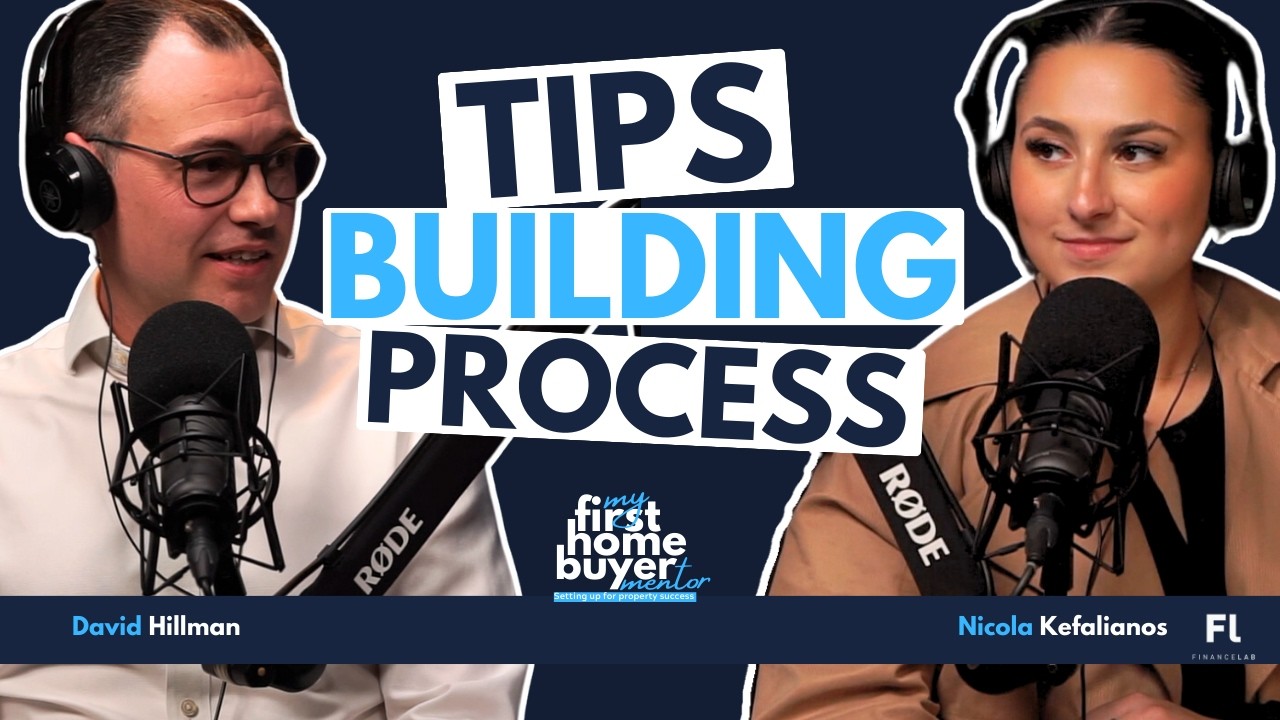
watch: nicola walks the build through its stages in plain english.
building selections: staying on budget and adding value
selections are the fun part and the dangerous part. it's when you sit in a showroom and choose your kitchen, your flooring, your tapware, your tiles, all of it. it's also where a lot of building budgets quietly blow out, because every nice upgrade is a small yes, and the small yeses add up fast.
here's what i'd do. before you walk in, decide your absolute upgrade budget and treat it like a hard line, because the showroom is designed to make you spend more. know what's already included in your build so you're only paying for genuine upgrades, not things you assumed were extra. and go in with a list of what actually matters to you, so you're not deciding everything emotionally on the day.
the smart move is to split your upgrades into two buckets. the first is structural and hard-to-change-later: things like an extra power point, plumbing for a future second bathroom, ceiling heights, or wiring. spend here, because doing it during the build is far cheaper than retrofitting it. the second is cosmetic: paint colours, splashbacks, light fittings, the stuff you can change yourself down the track for not much. go cheaper here and upgrade over time if you want.
that's also roughly how you add value rather than just spend money. kitchens, bathrooms and good layout tend to hold value; flashy finishes that date quickly usually don't. spend where it's permanent and where buyers care, save where you can swap it out with a weekend and a paintbrush.
| bucket | what it covers | the smart move |
|---|---|---|
| structural, hard to change later | extra power points, plumbing for a future bathroom, ceiling heights, wiring | spend here, doing it during the build beats retrofitting |
| cosmetic | paint, splashbacks, light fittings, the swappable stuff | go cheaper, upgrade over time if you want |
how payments work when you build
this is the part that surprised me most, so it's worth slowing down on. when you build, you don't pay for the whole house in one go like you do buying an established home. you pay the builder in stages as the work gets done, and these are called progress payments or progress draws.
a typical build runs through stages like deposit, base or slab, frame, lock-up (when the home is weatherproof), fixing (internal fit-out), and completion. at the end of each stage the builder invoices you, and your construction loan releases that portion of the money to pay them. so the loan doesn't hand you a big lump sum, it drip-feeds to the builder as the house actually goes up.
the bit that catches first home buyers out is how interest works during the build. you usually only pay interest on the money that's been drawn so far, not the full loan, so your repayments start small and grow as more of the loan is released. that sounds manageable, and it is, but here's the real cost: while you're building, you're very often paying rent and loan interest at the same time, for months. budgeting for that overlap is the single most important thing nobody tells you.
your deposit also works a bit differently across the two contracts, the land and the build, so this is exactly the kind of thing to walk through with a lender or broker early. you don't need to be a finance expert, you just need to know the money goes out in stages and to plan for paying twice for a while.
the bit nobody tells you
while you're building you're very often paying rent and loan interest at the same time, for months. budgeting for that overlap is the single most important thing to plan for.the hidden costs of building a house
if there's one section to read twice, it's this one, because the gap between the price on the brochure and the cost of the finished home is where building budgets go to die. the headline number is almost never what you actually pay.
the big one is site costs. that's everything to do with preparing your specific block: the slope of the land, the soil type, rock, retaining walls, drainage, connecting power, water and sewer. two identical homes on two different blocks can cost very different amounts to build because of what's under the ground. always ask whether site costs are fixed or just an estimate, because an estimate can move a long way.
then there's the finished-home list: floor coverings, driveways and paths, fencing, landscaping, letterbox and clothesline, blinds and window coverings, and the upgrades you'll choose in selections. brochure packages often leave a lot of this out, so the place you can actually live in costs more than the place that's advertised.
and there are the buying-side costs that apply to any purchase: stamp duty (which can be lower on new builds or off the plan, depending on your state, so check the current rules), conveyancing and legal fees, loan and lenders mortgage insurance costs if your deposit is under 20%, and building inspections. my honest advice is to build a list of every line item, put a real number next to each, and add a buffer on top, because something always comes up. price the finished, fenced, landscaped, move-in-ready home, not the empty base build.
rough guide only, figures vary by block, state and year, so price the finished, fenced, landscaped, move-in-ready home and add a buffer.
the bit i'd flag
the headline number is almost never what you actually pay. build a list of every line item, put a real number next to each, and price the move-in-ready home, not the empty base build.grab my building vs buying guide
the side-by-side i use to weigh up a new build against an established home, with the costs people forget.
adding value through renovation
not every first home is a brand-new build. plenty of first home buyers get in by buying an older, cheaper established home and improving it over time, and that's a completely valid way to build wealth, as long as you're realistic about it.
the smart version is to buy the worst house in a good street, in a suburb people want to live in, where the location does the heavy lifting and you add value with work. cosmetic renovations, paint, flooring, a kitchen and bathroom refresh, tidying the yard, tend to give the best return for the least risk, because they're what buyers notice and they don't require structural changes or big approvals.
the trap is over-capitalising, which is spending more on the renovation than it adds to the value of the home. it's easy to fall in love with a project and pour money in well past the point where you'd ever get it back. before you start, get a sense of what renovated homes in the same street actually sell for, because that's your ceiling. if your purchase price plus your renovation budget gets close to or above that number, the maths probably doesn't work.
for a true first home, i'd also be honest that renovating while you live in it, or while you're already stretched on a new mortgage, is hard. it's a real strategy, just go in with a budget, a buffer, and a clear idea of which jobs genuinely add value versus the ones that are just nice to have.
one to watch
the trap is over-capitalising, spending more on the reno than it adds to the home. get a sense of what renovated homes in the same street actually sell for, because that's your ceiling. hear it on the showhow payments work when building vs. buying a house
 hear it on the showthe benefits of buying land and building a house
 hear it on the showsteps in the building process
 hear it on the showbuilding selection: tips to stay within budget and add value
 hear it on the showhow to avoid hidden costs when building a house
 hear it on the showfirst home: adding value through renovation
related guides
the first home buyer guide what it costs to buy a first home deposit, grants and schemes the buying process settlement and legals home loans explained every question, answered free guides and checklists
common questions
what is a house and land package?
it's a block of land bundled with a home design to build on it, sold as one price. the important bit to know is it's usually two separate contracts, one to buy the land and one with the builder for the home, which affects how you pay and which grants apply. always check what's included versus what's an upgrade, because the advertised price is rarely the finished, move-in price. this is general information only, so check the current rules and your own numbers.
is it better to build or buy a first home?
there's no single right answer, it depends on your timeline and your budget. building often stretches your money further and can come with bigger new-home grants, but you wait months and carry extra costs while you do. buying established gives you certainty and a quicker move-in, but usually costs more in the suburbs first home buyers love. the honest version: building suits patient buyers who want control, established suits people who want to move in soon. check the current grant rules for your state, because they can change the maths.
what does buying off the plan mean?
it means buying a home before it's finished, or while it's still being built, based on the plans and a display, most often an apartment or townhouse. you pay a deposit, usually around 10%, to lock in the price, then pay the rest at settlement once it's built. the upside can include locking in today's price and lower stamp duty in some states, but the home can differ from the render and the timeline often moves, so read the contract carefully. this is general information only, so check the current rules.
what is a knock down rebuild?
it's demolishing an existing house and building a brand-new home on the same block, usually to get a new home in an established suburb where empty land doesn't exist. the steps are checking the block can take the new home, sorting demolition including any asbestos and service disconnections, then building as normal. it's rarely the cheapest way into a first home, and some new-home grants may not apply the same way, so check the current rules for your situation before you count on them.
what are the steps in the building process?
roughly: sort your finance with a construction loan in mind, choose your land and home design, sign the land and building contracts, do your selections (finishes and upgrades), wait for approvals and site prep, then construction in stages where you pay progress payments as each stage finishes, and finally handover where you inspect and get the keys. the two stages that catch people out are selections, where the budget grows, and the build, where timelines slip. go in expecting both and it's far less stressful.
what hidden costs come with building a house?
the big one is site costs, which is preparing your specific block (slope, soil, rock, retaining, drainage, connecting services), and these can vary hugely between blocks. then there's the finished-home list the brochure leaves out: floor coverings, driveway, fencing, landscaping, blinds, and your selection upgrades. plus the usual buying costs like stamp duty, legal fees, and lenders mortgage insurance if your deposit is under 20%. price the finished, move-in-ready home and add a buffer, because something always comes up. check the current rules for any stamp duty concessions.
how do progress payments work when building?
when you build, you don't pay all at once, you pay the builder in stages as the work is done, often deposit, base, frame, lock-up, fixing and completion. your construction loan releases each portion as that stage finishes, so the money goes to the builder in steps rather than a lump sum. you usually only pay interest on what's been drawn so far, so repayments start small and grow. the real thing to budget for is paying rent and loan interest at the same time during the build. talk to a lender or broker early, as this is general information only.
general information only, not personal financial advice. Finance Lab, Credit Representative Number 425945, authorised under Australian Credit Licence Number 389328. scheme, grant and cost figures are explanatory only, change regularly, and were last reviewed june 2026. always confirm current rules with the relevant government source.