
buying your first home in new south wales: the short version
buying your first home in nsw feels like everyone's quoting different numbers at you, and half of them are out of date. so let me give you the clean version first, then we'll go deeper on each piece below.
there are really two state things to get your head around, and people constantly mix them up. the first is the first home owner grant, which is a one-off cash payment, but only for new homes (a brand-new build or a substantially renovated property), not an existing house. the second is the first home buyers assistance scheme, which is the big one for most people: it can wipe out or reduce your stamp duty (officially called transfer duty) on a home up to a set price, whether it's new or existing. on top of those two, there's the federal first home guarantee, which is a deposit scheme, not a grant, and it sits over the top regardless of which state you're in.
here's the part i want you to take away: every one of these has a price cap or a threshold, and those caps move. i'm deliberately not going to quote you a dollar figure that's three months stale, because the wrong number can blow your budget or make you think you've missed out when you haven't. instead, each section below tells you exactly which official body sets the rule and where to check the current figure. if you do one thing, bookmark revenue nsw for the state schemes and the federal scheme site for the guarantee.
and if all of this is making your head spin, that's normal. my dad, john kefalianos, is a mortgage broker, and even he'll tell you the eligibility fine print is where people trip up, not the headline number. so read the deep guides i've linked, then talk to someone who can run your actual situation.
| scheme | what it is | applies to |
|---|---|---|
| first home owner grant | one-off cash payment | new homes only |
| first home buyers assistance scheme | stamp duty exemption or concession | new and existing homes |
| first home guarantee (federal) | 5% deposit, no lmi | new and existing, sits over the top |
worth knowing
every one of these has a price cap or threshold, and those caps move. don't bank on a dollar figure that's three months stale, check the official body for each before you set your budget.the nsw first home owner grant: how much, the new-build rule and who may qualify
the first home owner grant (often shortened to fhog) is a one-off cash payment from the nsw government, administered by revenue nsw. the catch that surprises most people: it only applies to new homes. that means a newly built home that nobody has lived in, or a substantially renovated property, or building your own home on land you buy. if you're buying an existing, previously-occupied house, this grant is not for you, though the stamp duty scheme below probably still is.
on amounts and caps: there's a set grant figure, and there's a total value cap on the property (and a separate cap for house-and-land contracts). i'm not going to print those numbers here because they're year-volatile and revenue nsw can change them, and the cap is a hard line, not a sliding scale. one dollar over and you get nothing, so this is exactly the kind of figure you want to confirm against the live page, not a blog. check the current grant amount and the current property value caps with revenue nsw before you make an offer on anything new.
who may qualify, broadly: you generally need to be an individual (not a company or trust), at least 18, an australian citizen or permanent resident, and you and your partner must not have owned residential property in australia before. you also usually have to move in and live there as your home for a continuous period within the first year. those are the headline conditions, but the exact rules and the move-in window are set by revenue nsw, so treat this as general information only and read their eligibility page.
here's the honest version of how to use it: because it's new-builds only, the grant matters most if you're already leaning towards a new apartment, a house-and-land package or a knock-down rebuild. if you're shopping existing homes, don't get hung up on missing it, the stamp duty scheme is usually the bigger saving anyway.
the first home buyers assistance scheme: stamp duty exemption and concession
this is the one that saves most first home buyers the most money in nsw, so it's worth understanding properly. the first home buyers assistance scheme (fhbas) deals with stamp duty, which in nsw is officially called transfer duty. depending on the price of the home, you might pay no transfer duty at all (a full exemption), or a reduced amount (a concession). it works on both new and existing homes, which is the key difference from the grant above.
the way it's structured: up to a certain price, eligible first home buyers pay zero transfer duty. then there's a band above that where you pay a reduced, concessional rate that phases up as the price rises, until you hit the top threshold where the scheme stops and full duty applies. there are separate thresholds again if you're buying vacant land to build on. i'm not quoting the exact thresholds here on purpose, because they've been lifted before and can be again, and being just over a line changes your bill by a lot. check the current exemption and concession thresholds with revenue nsw before you set your maximum offer.
on eligibility, it's similar in spirit to the grant: you generally need to be an individual buying your first home in australia, meet the residency rules, and move in and live there for a continuous period within the first year. one important practical note, stamp duty is due early in the process (usually around settlement), so you want to know before you bid whether you'll be exempt, on the concession or paying full freight. this is general information only, so confirm your exact position against revenue nsw or with someone running your numbers.
what i'd actually do: work out which side of the thresholds your target price sits on, because a property a little over the exemption line can effectively cost you more than one a little under it once duty is added. that's the kind of thing a broker or conveyancer maps out for you, and it's worth doing before you fall in love with a place.
the bit i'd flag
being just over a threshold changes your duty by a lot, so a property a little over the exemption line can cost you more than one a little under it. confirm the current thresholds with revenue nsw before you set your maximum offer.the cooling-off period in nsw: your 5 business days (and the 0.25% catch)
this one trips up a lot of first home buyers, so read it twice. in nsw, when you buy a residential property by private treaty (the normal way, not an auction), the contract comes with a cooling-off period of 5 business days. it runs from the day contracts are exchanged and ends at 5pm on the fifth business day. during that window you can pull out of the purchase, even if you've simply changed your mind, which is your safety net while you finish your finance, building inspection and final checks.
now the catch nobody warns you about: cooling off is not free. if you exercise it and walk away, you forfeit 0.25% of the purchase price to the seller. on a typical home that's a real chunk of money, so it's a genuine cost, not a formality. the 0.25% figure is also why the minimum deposit to exchange with a cooling-off period is set so low, so don't be surprised when the agent talks about a small holding deposit to lock things in.
the big exception: there is no cooling-off period when you buy at auction, or when you exchange contracts on the same day as a passed-in auction property in some cases. if you're bidding at auction, you are committed the moment the hammer falls, which means all your due diligence, your finance and your inspections have to be done before you raise your hand. that's a completely different risk profile to a private-treaty purchase, and it's why auction buyers lean harder on their broker and conveyancer up front.
one more thing you can do: it's sometimes possible to waive or extend the cooling-off period by agreement (a section 66w certificate from your conveyancer or solicitor waives it). don't sign one of those without advice. this is general information about how cooling off works in nsw, and the precise rules live with nsw fair trading, so check the current rules and get your own legal advice before you exchange.
general information only, the precise rules live with nsw fair trading, check the current rules and get your own legal advice before you exchange.
one to watch
there is no cooling-off period at auction, so all your finance, building inspection and due diligence has to be done before you raise your hand.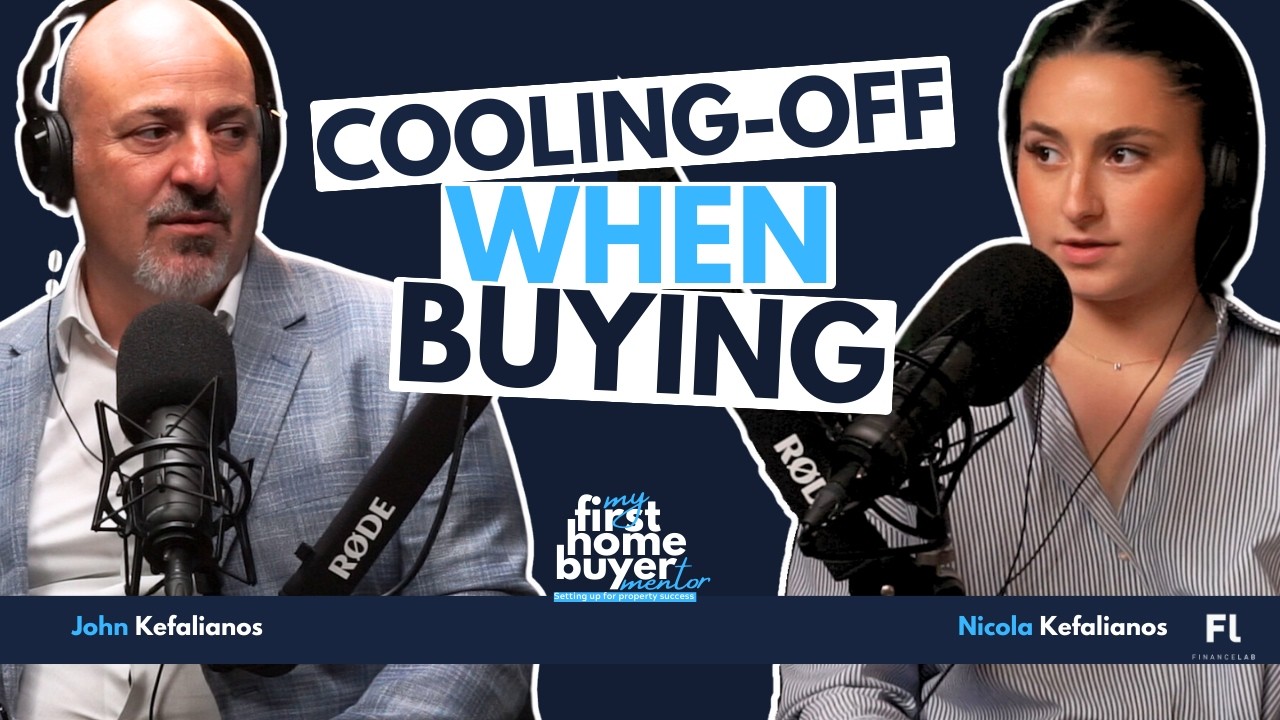
watch: nicola and john walk through how the cooling-off window actually works.
nsw price thresholds for the federal first home guarantee (and where fhss and help to buy fit)
the federal schemes sit on top of the nsw ones, and you can often use them together, so don't think of it as either-or. the headline federal one is the first home guarantee, run through housing australia. it lets eligible first home buyers purchase with as little as a 5% deposit while the government guarantees part of the loan, which means you avoid lenders mortgage insurance (lmi). that lmi saving alone can be thousands, and getting in with a smaller deposit can be the difference between buying this year and buying in three years.
the thing that matters for nsw buyers is the property price cap, because each location has its own ceiling and sydney's is higher than regional nsw. the caps were lifted from 1 october 2025, and the scheme also dropped its income limits and the cap on the number of places, which made it far more usable. but caps and rules do change, so i'm not printing the sydney figure here, check the current first home guarantee price cap for your nsw location on the official scheme site before you rely on it.
two more federal levers worth knowing. the first home super saver scheme (fhss) lets you make extra voluntary contributions into your super and later withdraw them (plus associated earnings) to put towards your deposit, which can be more tax-effective than saving in a regular account. it's run by the ato, there are limits on how much you can contribute and withdraw, and you have to apply before you sign, so check the current fhss rules and limits with the ato early.
the second is help to buy, the federal shared-equity scheme where the government takes an equity share in your home so you need a smaller deposit and a smaller loan. it has its own income and price caps and limited places, and it's not right for everyone because the government owns a slice of your home until you buy them out. it's administered through housing australia, so check the current help to buy eligibility and caps there. for completeness: schemes you might read about like keystart, homestart or a section 32 vendor statement are not nsw, they belong to western australia, south australia and victoria respectively, so you can safely ignore them here.
| lever | what it does | who runs it |
|---|---|---|
| first home guarantee | buy with a 5% deposit, no lmi | housing australia |
| first home super saver (fhss) | save your deposit inside super, withdraw later | ato |
| help to buy | government takes an equity share, smaller deposit and loan | housing australia |
the honest part
caps and rules change, and sydney's price cap was lifted from 1 october 2025. check the current first home guarantee price cap for your nsw location on the official scheme site before you rely on it.buying in sydney: where a first home buyer realistically starts
let's be real about sydney, because the headline median will scare you off before you've started. as a first home buyer you are almost never starting in the eastern suburbs or the inner ring, and that's fine, plenty of people build real equity from a smart first purchase further out and trade up later. the move is to match where you buy to the schemes above, especially the stamp duty thresholds and the first home guarantee price cap for your area.
in practice, first home buyers in greater sydney tend to look at the growth corridors and the more affordable middle-and-outer suburbs: the south-west around the new western sydney airport and the leppington-to-oran park stretch, the north-west growth area, and pockets out towards penrith and st marys where new house-and-land and apartments come in under the caps. apartments and townhouses across many established middle-ring suburbs also open up because the entry price sits lower than a freestanding house. i'm not naming a single winner suburb, because the right one depends on your commute, your deposit and where the price caps land you, but those are the areas where the maths tends to work.
here's the honest framing i'd use: a slightly smaller place, or a unit instead of a house, or a suburb 10 minutes further from where you pictured yourself, can be the difference between qualifying for a full stamp duty exemption and the first home guarantee versus missing both. that single decision can be worth more than years of extra saving. don't anchor on the postcode you dreamed about, anchor on getting in.
if you want to go deeper on the suburb-by-suburb side, that's its own piece. this page is the schemes router, so use it to lock in what you qualify for, then go suburb-hunting with those numbers in hand.
what to do next as a nsw first home buyer
okay, you've got the lay of the land, here's what i'd actually do next, in order, so it doesn't stay theory.
first, get your real numbers. work out your genuine deposit (including anything sitting in fhss super), then get a borrowing estimate so you know your true price ceiling. this is the step that tells you which schemes you're even playing for. second, map your target price against the two nsw thresholds, the stamp duty exemption and concession bands with revenue nsw, and the first home guarantee price cap for your sydney or regional nsw location, so you buy on the right side of the lines. third, line up your team early, a conveyancer or solicitor before you make offers, not after, because they're the ones who handle the contract, the cooling-off question and the section 66w certificate if it ever comes up.
fourth, decide private treaty versus auction with eyes open, because as you read above, auction means no cooling-off and all your checks done in advance. fifth, apply for anything that needs applying for before you sign, the fhss withdrawal request and the first home guarantee place both have to be sorted ahead of time, not at settlement.
when you're ready to turn this into a plan for your actual situation, you can book a chat with the team at finance lab and they'll run your numbers, sort your pre-approval and tell you straight which schemes you qualify for. and grab my first home buyer checklist on the way through so you don't miss a step. everything on this page is general information only, so check the current rules with the official sources before you rely on any of it.
from here, dig into the deep guides: the full stamp duty walkthrough, the deposit and grants pillar, and the first home buyer episodes where we talk through real buyer stories. those go a layer deeper than this router page can.
grab my deposit roadmap
the step-by-step on getting your deposit and grants sorted before you make an offer, so nothing trips you up at the line.
first home owner grant (new homes) - nsw
what it is: a one-off cash grant from the nsw government for eligible first home buyers, but new homes only (a newly built home, a substantially renovated home, or building on your own land). existing, previously-lived-in homes do not qualify. amounts and caps: there is a set grant amount and a hard property value cap (with a separate cap for house-and-land contracts). these are year-volatile and the cap is all-or-nothing, so check the current grant amount and property value caps with revenue nsw. who may qualify: generally individuals (not companies or trusts), 18+, australian citizen or permanent resident, who have not owned residential property in australia before, and who move in within the required period. source: revenue nsw, first home owner grant (new homes), revenue.nsw.gov.au. general information only, dated june 2026, check the current rules.
last reviewed june 2026
first home buyers assistance scheme (stamp duty) - nsw
what it is: relief on stamp duty (transfer duty) for eligible first home buyers, on new and existing homes. up to a set price you may pay no transfer duty (a full exemption); above that, up to a higher threshold, you may pay a reduced concessional rate; vacant land has its own separate thresholds. amounts and caps: the exemption and concession thresholds have been lifted before and can change, and being just over a line materially changes your duty, so check the current thresholds with revenue nsw before setting your offer. who may qualify: generally individuals buying their first home in australia, meeting the residency and move-in conditions. source: revenue nsw, first home buyers assistance scheme, revenue.nsw.gov.au. general information only, dated june 2026, check the current rules.
last reviewed june 2026
cooling-off period - nsw
what it is: when you buy residential property by private treaty in nsw, the contract carries a cooling-off period of 5 business days, ending at 5pm on the fifth business day after exchange. you can withdraw during this window, but you forfeit 0.25% of the purchase price if you do. there is no cooling-off period for purchases at auction. the period can be waived (via a section 66w certificate) or varied by agreement, get legal advice before signing one. source: nsw government / nsw fair trading, buying property in nsw (contracts and deposits), nsw.gov.au. general information only, dated june 2026, get your own legal advice and check the current rules.
last reviewed june 2026
first home guarantee (federal) - nsw price caps
what it is: a federal scheme run through housing australia that lets eligible first home buyers purchase with as little as a 5% deposit while the government guarantees part of the loan, so you avoid lenders mortgage insurance (lmi). price caps: each location has its own property price cap, and sydney's is higher than regional nsw. caps were lifted from 1 october 2025, and income limits and place limits were removed. caps and rules change, so check the current first home guarantee price cap for your nsw location. source: housing australia / australian government 5% deposit scheme, firsthomebuyers.gov.au and housingaustralia.gov.au. general information only, dated june 2026, check the current rules. (note: keystart, homestart and section 32 are wa, sa and vic respectively and do not apply in nsw.)
last reviewed june 2026
 hear it on the showwhat you need to know about cooling off periods when buying property
 hear it on the showbreaking down the first home guarantee scheme
 hear it on the showunderstanding how home grants work!
 hear it on the showhow to make an offer
also by location: affordable suburbs in Sydney first home buyer Western Australia first home buyer Victoria first home buyer Queensland first home buyer South Australia
frequently asked questions
how much is the first home owner grant in nsw?
the nsw first home owner grant is a set one-off amount paid by revenue nsw, but only for new homes (a brand-new build or a substantially renovated property), not existing houses, and only up to a hard property value cap. the amount and the caps can change year to year, so i'm not going to quote a stale figure here. check the current grant amount and property value caps with revenue nsw. this is general information only.
do first home buyers pay stamp duty in nsw?
often no, or a reduced amount. under the first home buyers assistance scheme, eligible first home buyers in nsw can pay zero stamp duty (transfer duty) on a home up to a set price, then a reduced concessional rate up to a higher threshold, on both new and existing homes. above the top threshold you pay full duty. the thresholds move, so check the current exemption and concession figures with revenue nsw before you set your budget. this is general information only.
how long is the cooling-off period in nsw?
for a residential purchase by private treaty in nsw, it's 5 business days, ending at 5pm on the fifth business day after contracts are exchanged. if you pull out during that window you forfeit 0.25% of the purchase price. there is no cooling-off period when you buy at auction. the period can be waived or varied by agreement, so get legal advice and check the current rules with nsw fair trading before you sign. this is general information only.
what is the first home buyers assistance scheme?
it's the nsw stamp duty relief for first home buyers, administered by revenue nsw. depending on the price of the home, eligible buyers pay either no transfer duty (a full exemption) or a reduced concessional rate, and it applies to both new and existing homes (vacant land has its own separate thresholds). it's usually the biggest single saving for nsw first home buyers. check the current thresholds and eligibility with revenue nsw. this is general information only.
what is the price cap for first home buyer stamp duty relief in nsw?
the first home buyers assistance scheme has two key price points: a full exemption up to one threshold, and a reduced concessional rate up to a higher one, above which full stamp duty applies. those thresholds have been lifted before and can change again, and being a dollar over a line changes your bill significantly, so i won't print a figure that might be out of date. confirm the current exemption and concession thresholds with revenue nsw. this is general information only.
general information only, not personal financial advice. Finance Lab, Credit Representative Number 425945, authorised under Australian Credit Licence Number 389328. scheme, grant and cost figures are explanatory only, change regularly, and were last reviewed june 2026. always confirm current rules with the relevant government source.