
which adelaide suburbs are affordable for first home buyers right now?
let me be straight with you: "affordable" in adelaide has moved. the days of grabbing something cheap five kilometres from the city are mostly gone, so the honest answer is that the best-value entry points now sit in a ring further out, plus a handful of satellite towns the rest of australia forgets exists.
the broad pattern looks like this. the outer north (think the playford and salisbury corridors, out towards gawler) and the outer south (the onkaparinga area, down towards the southern beaches and the morphett vale to seaford stretch) are where most first home buyers actually find something in budget. there are also commuter towns like mount barker in the hills and the gawler area to the north that pull in buyers who'll trade a longer drive for more house. closer in, you'll occasionally find an older unit or a small two-bedder in the inner north-west or western suburbs that lands in range, but you're competing hard for it.
i'm deliberately not quoting you suburb-by-suburb prices, because they shift month to month and a number i write today is wrong by the time you read it. what i'd actually do is open realestate.com.au or domain, set your real max budget, draw the map around adelaide and just look at where the dots cluster. that one exercise tells you more about your real options than any "top 10 cheapest suburbs" list ever will.

watch: the suburbs and corridors worth a look, in nicola's own words
worth knowing
the cheapest stock has moved to the outer north, outer south and a few satellite towns, not the inner ring. widen your map early or you'll keep missing budget.what counts as affordable in adelaide in 2026?
"affordable" only means something next to your own numbers, so here's the honest framing. for most single first home buyers in adelaide, an entry property tends to mean an older unit, a townhouse or a smaller house in the outer corridors. for couples and households pooling two incomes, a standalone three-bedder out north or south comes back onto the table. the gap between those two realities is huge, which is why "what's affordable" is really "what can i borrow plus what have i saved."
the useful mental model is to work backwards from your borrowing power, not forwards from a suburb you like. a lender looks at your income, your existing debts (car loans and afterpay-type accounts count more than people expect), your living costs and the current interest rate, then tells you a number. your budget is roughly that number plus your deposit, minus your buying costs. that's your real ceiling. everything above it is window shopping.
the encouraging part: adelaide still sits well below sydney, melbourne and brisbane on price, so the same income that buys you almost nothing in those cities buys you a genuine home here. the trade-off is that adelaide has been one of the faster-moving capital markets in recent years, so the cheap end keeps drifting outward. don't anchor to what a mate bought three years ago. price your search on today's listings, and check the current market before you firm up a budget.
affordable suburbs in adelaide under $500k (by region)
a budget around the $500k mark in adelaide is workable, but where it lands you depends entirely on which direction you head, so here's the regional shape of it (always confirm against current listings, because i'm giving you the lay of the land, not a price guarantee).
north and outer north: this is the most consistent hunting ground for first home buyers. the salisbury and playford corridors and the run towards gawler tend to offer the most standalone houses and house-and-land stock for the money. it's where a lot of new builds happen too, which matters a lot for the sa schemes (more on that below).
south and outer south: the onkaparinga area, the morphett vale to noarlunga to seaford stretch and the southern coastal fringe give you a mix of older houses, units and newer estates, with the bonus of being closer to the beach than the north. value is real here, though the nicer beachside pockets push past entry budgets fast.
inner ring and units: closer to the city your money mostly buys you a unit, an older apartment or a compact townhouse rather than a house with land. if walkability and a short commute matter more to you than a backyard, an inner unit can be the smarter buy, just go in with eyes open on strata (body corporate) fees, which eat into your borrowing room.
the hills and satellites: mount barker and the surrounding hills towns trade distance for space and a different lifestyle. great if remote or hybrid work means a longer commute isn't a daily tax. for a deeper how-to on weighing these trade-offs, my full guide on choosing a suburb is worth a read once you've got your budget locked.
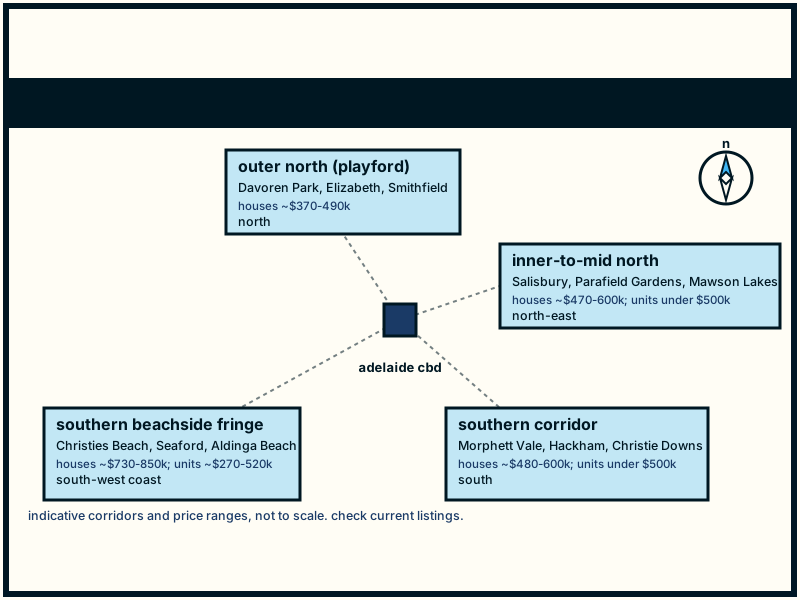
| corridor | example suburbs | indicative range |
|---|---|---|
| the outer north (playford growth corridor) | Davoren Park, Elizabeth North, Elizabeth South, Smithfield | houses roughly $370k to $490k |
| the inner-to-mid north corridor | Salisbury, Salisbury North, Parafield Gardens, Mawson Lakes | houses roughly $470k to $600k, with units and older homes under $500k |
| the southern corridor | Morphett Vale, Hackham, Hackham West, Christie Downs | houses roughly $480k to $600k, with cheaper older stock and units under $500k |
| the southern beachside fringe | Christies Beach, O'Sullivan Beach, Seaford, Aldinga Beach | houses roughly $730k to $850k for beach suburbs, units from around $270k to $520k |
| region | what you tend to get | the trade-off |
|---|---|---|
| outer north | most standalone houses and house-and-land stock, lots of new builds | longer commute the further out you go |
| outer south | older houses, units and newer estates, closer to the beach | nicer beachside pockets push past entry budgets fast |
| inner ring | an older unit, apartment or compact townhouse | strata fees eat into your borrowing room |
| hills and satellites | more space and a different lifestyle around mount barker | distance, so only if a longer drive suits your work |
one to watch
with inner units, get the strata (body corporate) fees and history before you fall in love. a low purchase price with high strata costs can quietly blow your budget.grab my under-$25k-deposit suburbs guide
the suburbs and corridors worth a look once your budget and deposit are sorted.
first home buyer schemes that apply in adelaide and sa
this is where adelaide gets genuinely interesting, because south australia has carved out a real advantage for first home buyers, with one big catch: most of the best help is tied to NEW homes, not established (second-hand) ones.
there are three big levers to know about. first, the first home owner grant (fhog), a one-off cash grant from the sa government for eligible first home buyers buying or building a NEW home. second, stamp duty relief, where eligible first home buyers buying a new home can pay little to nothing in stamp duty, which is a serious chunk of your upfront costs. third, the federal first home guarantee, a commonwealth scheme that can let eligible buyers purchase with a smaller deposit without paying lenders mortgage insurance, and that one isn't limited to new homes.
the scheme summaries below give you the shape of each one with the official source to check. i've deliberately not written the dollar figures into the copy, because caps and amounts get tweaked at budget time and i don't want you planning around a stale number. always check the current rules on the official page before you commit, and ideally have a broker confirm what you actually qualify for. my dad, john kefalianos, is a mortgage broker, and the one thing he sees trip people up most is assuming a scheme applies to their purchase when it quietly doesn't. read the eligibility, not the headline.
rough guide only. caps and amounts get tweaked at budget time, so check the current rules on each official page before you plan around any of them.
the bit i'd flag
most of the best sa help is tied to NEW homes, not established ones. people get tripped up assuming a scheme applies when it quietly doesn't, so read the eligibility, not the headline.how much deposit do you need to buy in adelaide?
the textbook answer is 20% of the purchase price, because that's the level where you avoid lenders mortgage insurance (lmi), the one-off cost a lender charges to protect itself when your deposit is smaller. on an adelaide entry home, a full 20% deposit is a lot of saving, so most first home buyers don't actually start there.
the real-world answer is that plenty of first home buyers get in with around 5%, and some with even less, by either paying lmi or using a scheme that waives it. the federal first home guarantee can let eligible buyers purchase with a low deposit and skip lmi entirely. and because we're in south australia, homestart finance offers low-deposit options that don't exist anywhere else in the country (i cover homestart in its own section below). so your deposit question is really "which path am i taking," not one fixed number.
whatever the headline deposit, budget for the extras on top: conveyancing, building and pest inspections, loan fees, and stamp duty if you're buying an established home (new homes may get relief, see below). a smaller deposit also means a bigger loan and higher repayments, so the cheapest deposit isn't automatically the smartest. what i'd do is get a broker to model two or three deposit scenarios side by side, see the monthly repayment difference, and pick the one you can actually live with, not just the one that gets you in fastest. check the current rules on any low-deposit scheme before you rely on it.
rough guide only. budget for extras on top (conveyancing, inspections, loan fees) and check the current rules on any low-deposit scheme before you rely on it.
stamp duty for first home buyers in south australia
stamp duty (the government tax on transferring property) is one of the biggest upfront costs of buying, and south australia treats first home buyers unusually well, but only on new homes.
here's the honest version. eligible first home buyers buying or building a NEW home (a brand-new house, an off-the-plan apartment, a house-and-land package, or vacant land to build on) can qualify for stamp duty relief that takes the bill down to little or nothing. that's a meaningful sum back in your pocket, often enough to shift what you can afford. the catch, and it's a big one: if you buy an established (already-lived-in) home in sa, you generally get no stamp duty concession at all. unlike some other states, there's no first-home discount on second-hand homes here.
that single rule reshapes a lot of adelaide buyers' plans. a new build in an outer estate that comes with stamp duty relief and the grant can work out cheaper overall than a slightly cheaper established house once you add the duty back in. it's not automatic (new builds have their own costs and timelines), but it's worth running both ways before you decide. the scheme block below has the official revenuesa source. amounts, thresholds and eligibility do change, so check the current rules before you bank on a figure, and get a broker or conveyancer to confirm your specific purchase qualifies.
the honest part
buy a NEW home and you may pay little to no stamp duty. buy an established home in sa and you generally get no first-home concession at all. that single rule can reshape your whole budget.homestart and other sa-specific options
if there's one thing first home buyers outside south australia don't know about, it's homestart finance. it's a state government lender set up specifically to help south australians into a home, and it offers things the big banks generally won't.
the headline is low-deposit lending. homestart has options that let eligible buyers start with a much smaller deposit than a standard bank loan needs, and there are tailored products for people like recent graduates and certain essential-service workers. there are also starter-type loans designed to help cover the upfront costs that usually catch first home buyers out. i'm not going to quote the exact deposit percentages or loan caps here, because homestart adjusts its products and they're easy to misremember, so check the current rules straight from homestart.
the honest caveat: homestart's loans can come with their own conditions and cost structures, and a low deposit always means a bigger loan and a tighter budget month to month. it's a genuinely useful tool, not a free pass. what i'd do is treat homestart as one option on the table alongside a standard bank loan plus the federal guarantee, and let a broker compare them properly for your situation. my dad's a mortgage broker, and homestart is exactly the kind of state-specific product a good broker will know whether to put in front of you or not. if you want to talk it through, you can book a chat with the team at finance lab.
the useful bit
homestart finance is a state government lender with low-deposit options the big banks won't offer. a genuinely useful tool, not a free pass, so let a broker compare it against a standard loan for your situation.how to actually shortlist an adelaide suburb
once your budget and deposit are sorted, picking the actual suburb is where most people freeze, so here's the practical method i'd use rather than another "best suburbs" listicle.
start with money, then lifestyle. set your true max budget in realestate.com.au or domain, draw the map around adelaide, and see which suburbs actually return results. that filtered map is your honest shortlist; ignore anywhere outside it for now. then layer your non-negotiables on top: commute to work, distance to family, public transport if you don't drive, and whether new builds (with their scheme benefits) are even available in that area. an outer-north estate and an inner-west unit are completely different lives, so be honest about which one you actually want to live in.
then do the unglamorous homework. drive the streets at different times, not just the open-inspection slot the agent picks. check the commute in real peak traffic. look at what's planned nearby (new infrastructure can lift an area, but it can also mean years of construction). and if you're looking at units, get the strata (body corporate) fees and history before you fall in love. a low purchase price with high strata costs can quietly blow your budget.
finally, get your finance sorted before you fall for a place, not after. a pre-approval tells you your real ceiling and stops you wasting weekends on homes you can't buy. for the deeper version of all of this, my full first home buyer guide walks through the whole journey, and when you're ready to put numbers to it, the team at finance lab can help you work out what you can actually borrow.
first home owner grant (fhog), south australia
what it is: a one-off cash grant from the south australian government for eligible first home buyers who buy or build a NEW home (a home that hasn't been previously sold or occupied, an off-the-plan apartment, or a qualifying substantially renovated home). it does not apply to established (second-hand) homes. to be eligible you generally need to be an individual (not a company or trust), have not received a first home owner grant anywhere in australia before, and live in the home as your main residence for a set minimum period after settlement. amounts and any value caps change at budget time, so do not plan around a fixed figure. check the current amount and rules at the official source before you commit. (verified June 2026; source: RevenueSA, https://www.revenuesa.sa.gov.au/first-home-owners-grant) this is general information only, not financial advice.
last reviewed june 2026
stamp duty relief for first home buyers, south australia
what it is: stamp duty (transfer duty) relief for eligible first home buyers buying or building a NEW home, including a new house, unit, townhouse or apartment, an off-the-plan apartment, a house-and-land package, or vacant land to build on. eligible buyers may pay little to no stamp duty on a qualifying new home. important: this relief generally does NOT extend to established (already-occupied) homes in sa, so the new-vs-established choice can change your upfront costs significantly. thresholds, caps and eligibility can change, so check the current rules at the official source and have a conveyancer or broker confirm your specific purchase qualifies. (verified June 2026; source: RevenueSA, https://www.revenuesa.sa.gov.au/stamp-duty-relief-for-eligible-first-home-buyers) this is general information only, not financial advice.
last reviewed june 2026
 hear it on the showyour first home in adelaide
 hear it on the showhow to find properties below $500k
 hear it on the showunderstanding how home grants work!
also by location: what it costs to buy a first home first home buyer South Australia
frequently asked questions
what are the cheapest suburbs in adelaide to buy a first home?
the most consistent value for first home buyers tends to sit in the outer north (the salisbury and playford corridors out towards gawler), the outer south (the onkaparinga area and the morphett vale to seaford stretch), and satellite towns like mount barker in the hills. closer to the city, your money mostly buys an older unit or townhouse rather than a house with land. i'm not naming specific prices because they shift constantly, so set your real budget on realestate.com.au or domain and see which suburbs actually return results. this is general information only, check current listings for real numbers.
how much deposit do i need to buy a first home in adelaide?
the standard target is 20% of the purchase price to avoid lenders mortgage insurance (lmi), but most first home buyers don't start there. plenty get in with around 5%, either by paying lmi or by using a scheme that waives it, like the federal first home guarantee, and in sa there's also homestart finance with its own low-deposit options. budget for extras on top, conveyancing, inspections and loan fees. the right deposit depends on which path you take, so this is general information only, check the current rules and get a broker to model a couple of scenarios for you.
do first home buyers pay stamp duty in south australia?
it depends entirely on whether the home is new or established. eligible first home buyers buying or building a NEW home in sa can qualify for stamp duty relief that takes the bill down to little or nothing. but if you buy an established (already-lived-in) home, you generally get no first-home stamp duty concession at all. that single rule can reshape your whole budget. amounts and eligibility change, so this is general information only, check the current rules at revenuesa and have a conveyancer confirm your purchase qualifies.
what first home buyer grants apply in adelaide and sa?
the main ones are the south australian first home owner grant (a one-off cash grant for eligible buyers of a NEW home), sa stamp duty relief for eligible new-home purchases, and the federal first home guarantee (a commonwealth scheme that can let eligible buyers purchase with a smaller deposit and skip lmi, and it isn't limited to new homes). homestart finance is a separate sa-specific lender worth knowing about too. amounts and eligibility shift at budget time, so this is general information only, check the current rules on each official page before you plan around any of them.
is it cheaper to buy in metro adelaide or regional sa?
regional sa and satellite towns like mount barker or out towards gawler generally give you more house for the money than inner-metro adelaide, but the metro corridors out north and south can be surprisingly competitive on price too, with the bonus of a shorter commute and more amenities. the real answer depends on your work, your lifestyle and whether a longer drive is a trade-off you'll actually be happy with day to day. this is general information only, price both against current listings and your real commute before you decide.
what is a realistic first home budget in adelaide in 2026?
the honest answer is that your budget is roughly your borrowing power plus your deposit, minus buying costs, not a number you pick from a suburb you like. a lender works out your borrowing power from your income, existing debts, living costs and the current interest rate. adelaide still sits well below sydney, melbourne and brisbane on price, so a genuine home is realistic on a normal income here, but the market has moved quickly, so don't anchor to what someone bought a few years ago. this is general information only, get a broker to confirm your real borrowing power and check the current market.
general information only, not personal financial advice. Finance Lab, Credit Representative Number 425945, authorised under Australian Credit Licence Number 389328. scheme, grant and cost figures are explanatory only, change regularly, and were last reviewed june 2026. always confirm current rules with the relevant government source.